My first job fair
I haven’t attended a job fair in decades, but I know they are all pretty similar: tables staffed by recruiters handing out swag and papers about their company and positions available. If you continue the conversation with the recruiter, they may ask for your resume but nowadays, it’s apparently “scan this QR code and apply online.” The job fair usually encourages attendees to dress to impress and bring multiple copies of your resume to hand out, but I’m not sure that matters anymore.
I debated attending all week because I still haven’t made any progress on my resume. And I still haven’t bought anything professional to wear, which was the problem a few weeks ago when I attended my first networking event.
But I woke up that morning and thought, “At least I have business cards.”
Getting ready
Music is a big part of me. When I first lost my job, I created a playlist on YouTube of songs that resonate with me: Unemployed - Job Search Inspiration. How I’m feeling about the job search and lyrics that encourage me. So I turned on my “Unemployed” playlist and started on Alanis Morrissette’s “Hand in my Pocket.” I felt it was fitting. “What it all comes down to is that everything’s gonna be fine.”
I wasn’t anxious or nervous. It helped that I had already attended a networking event, and that I’ve been talking to people that I’ve met through our transition firm, LHH.
I wasn’t going into the job fair with the expectation of walking out with a job. I was just irritated that I didn’t have anything to wear. At least dressing comfortably will make me more comfortable. And it might be a conversation starter to tell a recruiter or two that I was hesitant to attend because I felt like I didn’t have anything to wear, and to ask their opinion on attire.
I decided to bring 25 business cards. I handed out 17.
First impression
I decided to get there about 30 minutes early to “get into character” and mentally prepare.
The event was at Harris-Stowe State University: a renowned Historically Black College and University (HBCU) that started as a Teacher’s College. My grandmother got her teaching degree from Harris-Stowe. I walked around campus. It’s beautiful and there’s new construction going on everywhere. I had never been here before.
Ironically, Harris-Stowe is right next door to Wells Fargo.
I stood in the shade near the front doors and watched the recruiters come in. They were all in business-casual attire: khaki pants, blouses, polos, comfortable shoes. Maybe my jeans and the only blouse I own that still fits won’t be such a big deal.
I went into the facility about 15 minutes before the event started and they directed us to wait in the theater. I watched as other attendees walked in.
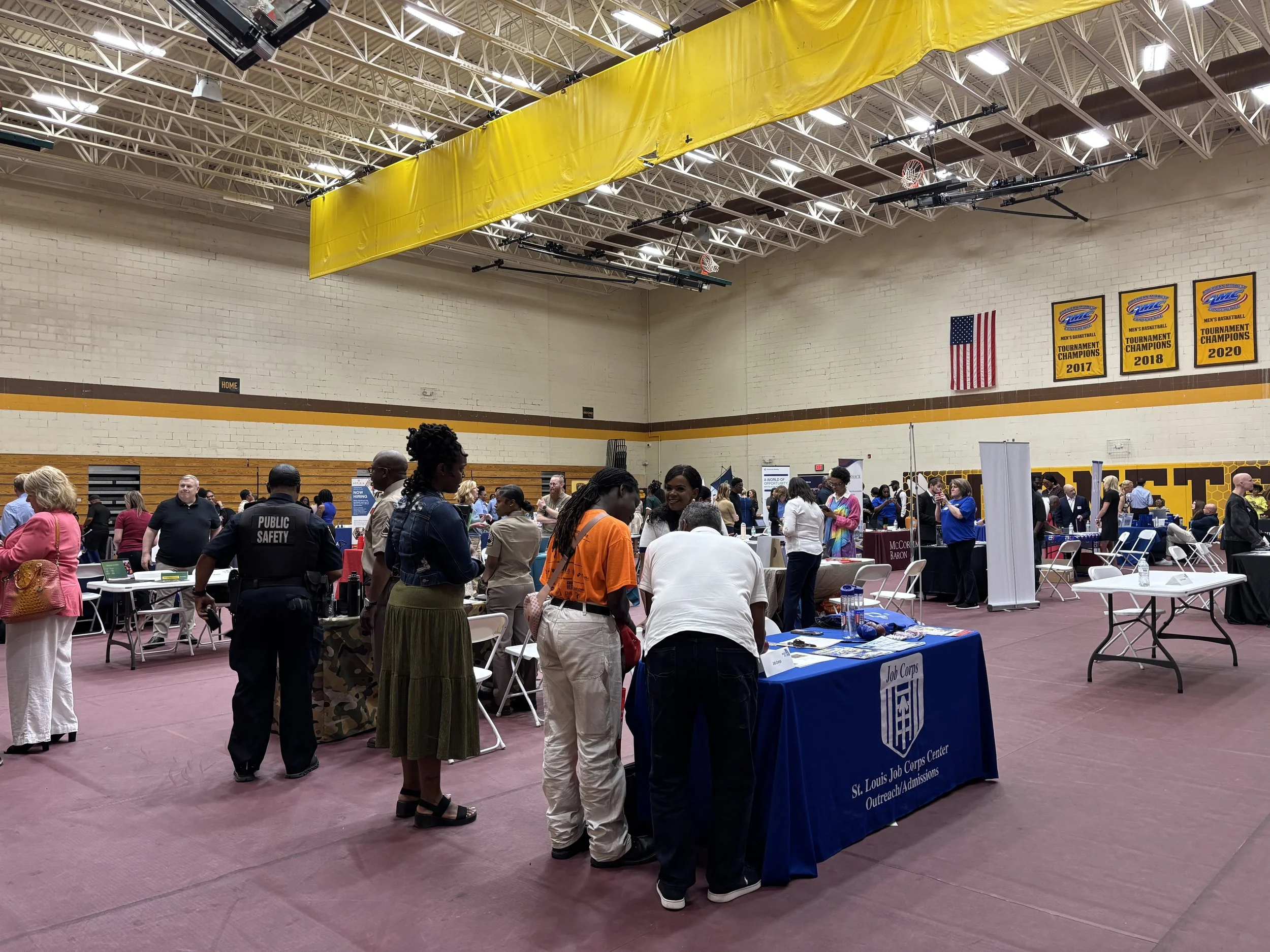
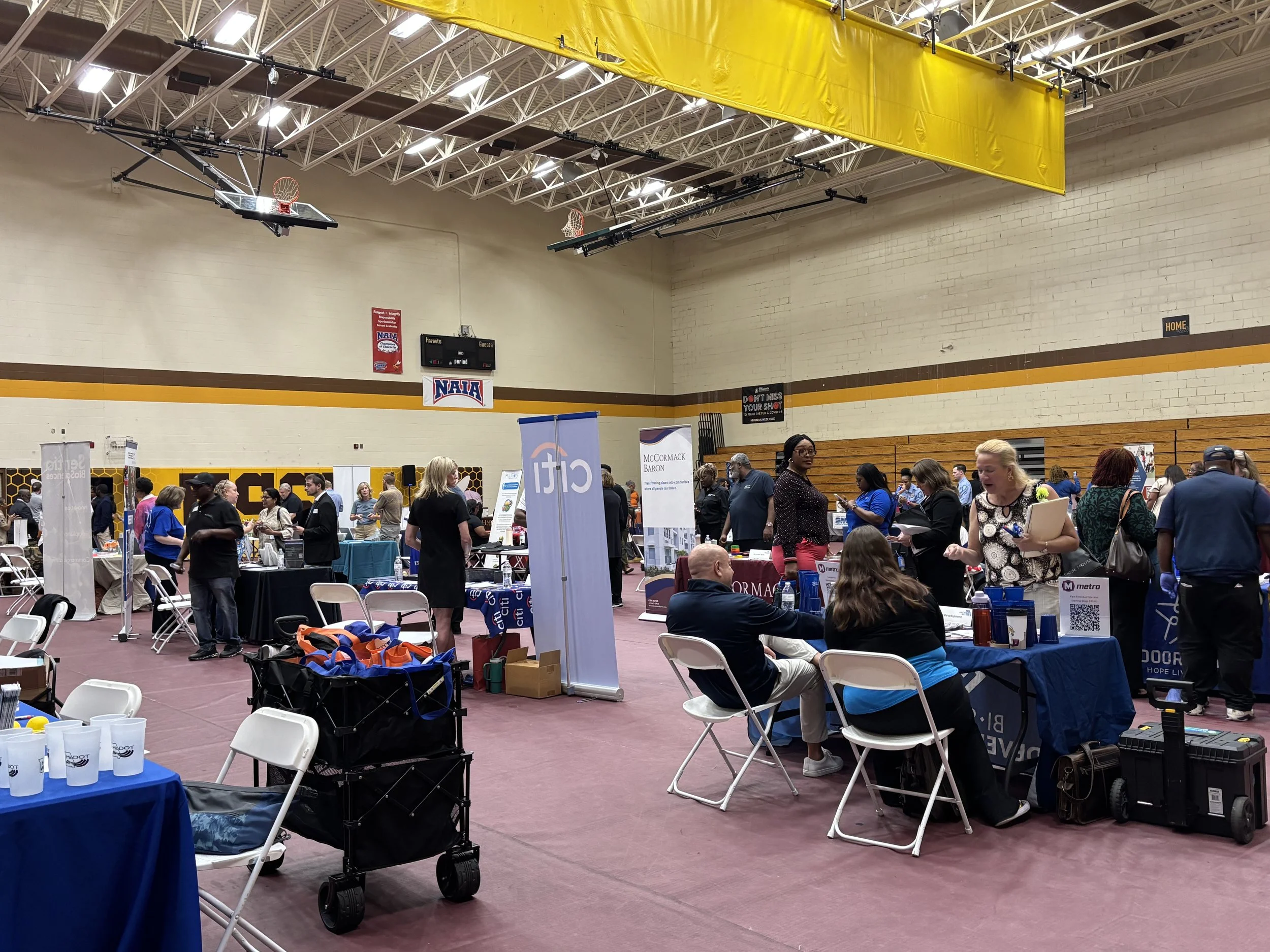
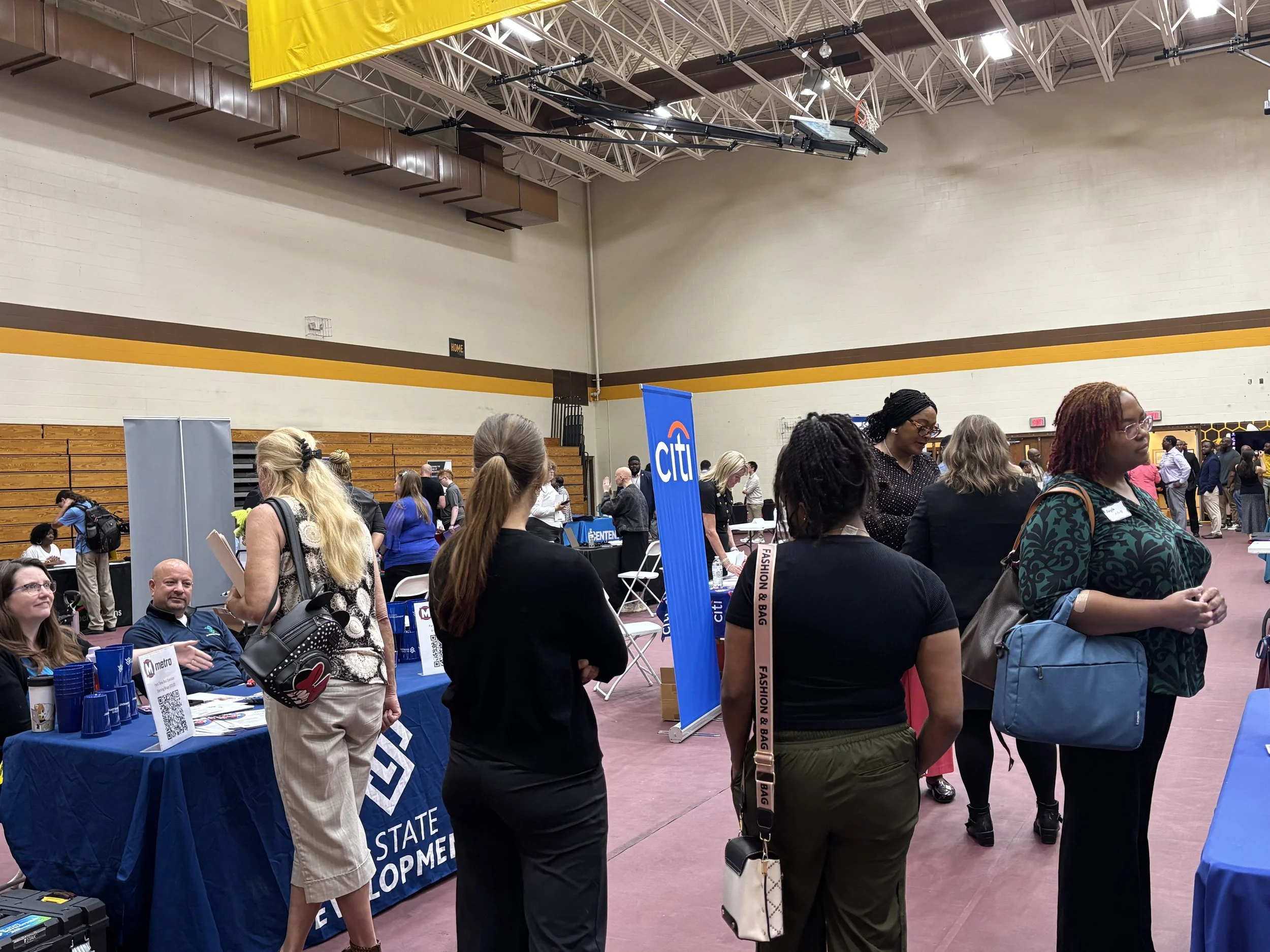
I was reassured when I saw that I wasn’t the only one in jeans and tennis shoes. Ages spanned from early 20s to senior citizens: people who were obviously older than Patti, my mother. (If you know me, you know her.) Some had manila folders or more formal leather-bound portfolios with resumes, but most didn’t.
First conversation
A young woman sat down a few rows in front of me. I introduced myself and explained why I was there: simply, “Hey. So I was recently laid off from Wells Fargo after about 10 years. The job market is tough, and it’s been a while since I’ve had to look for a job. I haven’t attended one of these in years. What brings you here today?”
Her name is Nalayah: a certified medical assistant (CMA) who will be starting her Bachelors of Nursing (BSN) in the fall. She hasn’t been able to find a job, either. She shares the same frustration with the applicant tracking systems (ATS). I said, “I thought that field had a really high demand – especially for CMAs.” She said, “They do. But I don’t have enough experience.”
This was her first job fair, too. She has completed all of her clinicals. She volunteers. She showed me her resume; it’s beautiful. I told her that it’s perfect for a job fair like this, but it won’t pass an ATS system because it’s formatted. She said that she’s been working with a job coach, so she has a separate resume that she uses to apply online. She’s frustrated that she needs to customize her resume for the keywords in the job description, and that so many application systems require you to enter the same things and answer questions. She stopped customizing her resume and just customizes in that entry system.
A CMA requires intense education and training. It’s an excellent entry-level role with growth potential itself, but especially as someone pursues a nursing degree. The equivalent in business is executive assistant or another administrative position. Without those positions in corporate, business can’t function. And if you’re looking for a higher business services role, those jobs get your foot in the door.
Personally, I am hospitalized every couple of years for testing because of my epilepsy, and I’m required to see multiple specialists throughout the year. I see a CMA more than a nurse. I wouldn’t have the same level of care without a CMA.
Have I ever questioned their years of experience? No.
In the event
There were about 50 companies at the event, and it was a good mix of employers: large and small corporations, government, union, travel and hospitality. Most businesses were technology and medicine, which are the major industries in St. Louis. iHeart Radio was recruiting for advertising sales while broadcasting live. I quickly realized that the audience was entry level positions and other positions that would not be a cubicle: police officers, security, transit operators, warehouse workers, food service, call centers. I was surprised at the starting wages for all of them.
The Small Business Administration (SBA) and local non-profits like Slate were there to promote their services for the job seeker and volunteer opportunities that will help someone build skills and network. I’ve benefited from SBA’s SCORE program as I explore starting my own business, but the education they provide is valuable to any job seeker and can be applied to any stage of the job search.
As I spoke to recruiters, I explained why I was there: “I was recently displaced from Wells Fargo after 10 years. My background is marketing and communications.” The response was usually that there were higher level positions open for “people like you” but those are filled so fast that they don’t know what the current status is, but it’s worth subscribing to job alerts or regularly checking their job boards.
That’s discouraging. But think about how many corporations are executing layoffs. So many corporations are cutting our positions. We need to think differently about what we apply for, what we would enjoy doing, the people that we work with and would want to work for, and the growth potential when the market turns – just like it did in 2008/2009 when it crashed the last time.
Two recruiters were laid off in that last crash in 2008/2009. At the time, they were in fields complementary to recruiting but not recruiting specifically. They encouraged the use of transferrable skills to explore other areas. They encouraged me to look at recruiting jobs. After the connections that I’ve made through displacement, I’m open to that. And they all recommended networking. Most recruiters commented that it was hard for interviewees to have a conversation or make eye contact.
Practice. Attend those networking events. Schedule calls with people that you don’t know so you can practice describing yourself. When you go out in public, be sure to make eye contact with the cashier at the grocery store and the waiter at the restaurant and simply say, “Thank you.”
I told two recruiters about my anxiety over what to wear and for their opinions on attire. They both said, “You look ready for the office in your jeans and blouse.” Even tennis shoes? They laughed and said, “I didn’t notice.” What they noticed? “You smiled and made eye contact.”
When I mentioned applicant frustration with the ATS, they shared that frustration. “We don’t get to review resumes anymore. We’re just given a list of people to interview. We know we’re missing a lot of qualified candidates, so we would rather meet someone in person, at a job fair like this.” They encouraged job seekers to research the companies that they want to work for and connect with those recruiters through LinkedIn. Recruiters are frustrated with the same things we are, and they want they same things we do: to hire people, not algorithms.
At the local Sheet Metal Workers Union table, I spoke with a current apprentice, very young – about my son’s age - who started his apprenticeship in high school. He said, “I’ve received a salary the whole time that I’ve been in the program, and I have about two years left before I’m fully certified.” I congratulated him for starting so early. “After a few years in marketing for construction and supporting trade-related groups, I’m really passionate about the trades. Your job can’t be replaced by AI, but my role in marketing and communications can.” When I asked what his starting salary would be, he said, “Probably about $80k.”
When I asked him why he chose sheet metal over another trade, he said, “I talked to them the most and I just really liked the guys.” Isn’t that what we’re all looking for? To just like the people that we work with?
After the event
I commented to Patti about the attire: “If you’ve been unemployed for a while, and someone like me who hasn’t worked in an office or a formal setting for years – you may not be able to afford a suit or dress clothes.”
I realized that most of the attendees were females about my age, in their 40s and 50s. I can’t find any documentation that confirms this is a pattern, but it may help for any female job seeker to connect with local women’s groups. You can often find them with local groups that support job skill development, chambers of commerce, or sites like Meetup.
And next time, I’ll bring a bigger bag to take the flyers they hand out. That leather-bound portfolio is a good idea. Put a notepad in there to take notes by hand. It’s awkward to carry your cellphone and try to type notes.
Big thanks go out to my Congressman, Wesley Bell, for organizing this job fair! We’re all in the same boat, regardless of political affiliation. We’re unemployed. The job market is tough. We need to stick together. And we need to tell our stories.
